An E-commerce Product Data Audit is a thorough review of the product data across your e-commerce platform (website, marketplace, ERP, etc.) to ensure its accuracy, consistency, completeness, and compliance with standards. The goal is to identify and address any issues in the product data that could negatively impact customer experience, sales, inventory management, or compliance with legal and industry regulations. E-commerce businesses rely heavily on product data to drive sales, maintain inventory, and deliver a seamless online shopping experience. Ensuring that your product data is accurate and up-to-date is essential for keeping your online store running smoothly.
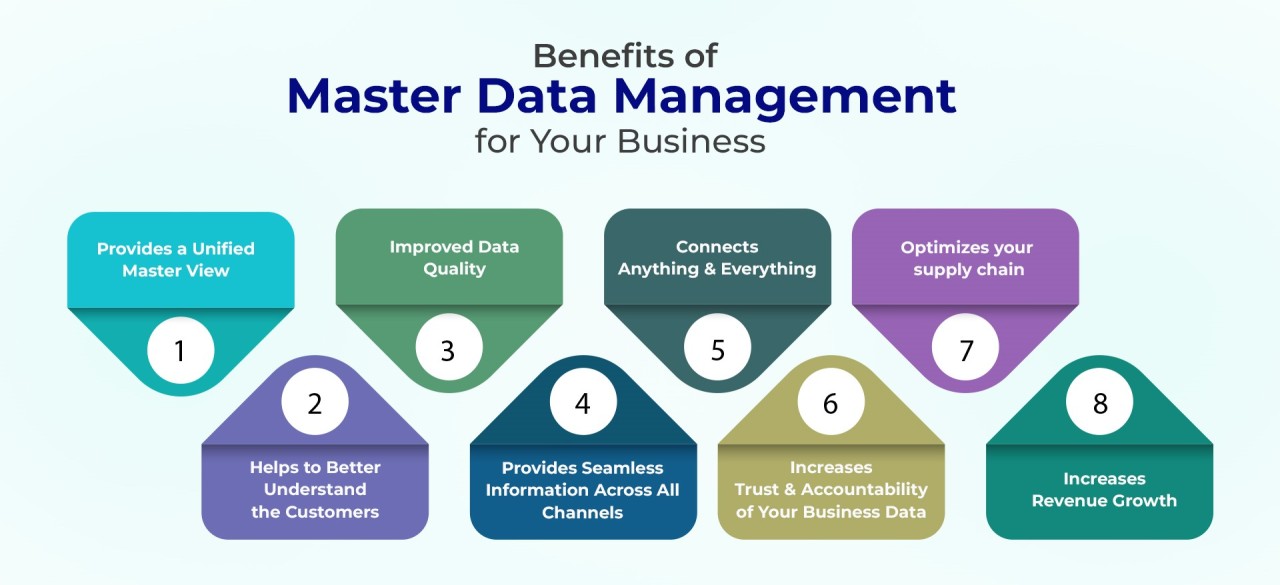
For e-commerce businesses, having a robust Master Data Management (MDM) strategy is crucial for ensuring data consistency, improving operational efficiency, enhancing the customer experience, and supporting growth. By centralizing product, customer, and other key data, businesses can unlock the full potential of their e-commerce platforms, streamline their operations, and deliver a personalized, seamless experience to their customers.
Key Areas in E-commerce MDM
- Product Data Management (PDM): Consistent product data across all channels ensures a seamless shopping experience.o Consistent product data across various channels (website, mobile app, marketplace) is essential for ensuring a seamless shopping experience.
- Customer Data Management (CDM): o Involves collecting and maintaining accurate customer information, including contact details, purchase history, preferences, and loyalty program status. o A centralized customer data repository allows businesses to segment customers effectively, improve marketing strategies, and personalize offerings.
- Inventory Management: o MDM for inventory ensures real-time, accurate tracking of stock levels across multiple warehouses or fulfillment centers. o This data is crucial for stock optimization, preventing overselling or stock outs, and improving customer satisfaction by providing accurate delivery timelines.
- Pricing and Promotions: o Pricing data includes not just the standard price but also discounts, promotional offers, and special pricing models (e.g., tiered pricing for wholesalers). o Managing pricing data through MDM ensures that pricing consistency is maintained across different channels (website, mobile app, third-party platforms)
- Supplier Data Management:o Centralizing supplier information like contact details, lead times, product offerings, and delivery schedules ensures smooth supply chain management and vendor relationships. o This also enables accurate vendor performance tracking and integration with procurement systems.
Importance of MDM in E-commerce
- Consistent Product Experience: By managing product data centrally, e-commerce businesses ensure that customers receive consistent information across all touchpoints, whether it's the website, mobile app, or third-party marketplaces.
- Personalized Customer Experience: o By managing product data centrally, e-commerce businesses ensure that customers receive consistent information across all touchpoints, whether it's the website, mobile app, or third-party marketplaces.
- Operational Efficiency:o By managing product data centrally, e-commerce businesses ensure that customers receive consistent information across all touchpoints, whether it's the website, mobile app, or third-party marketplaces.
- Omnichannel Consistency: o In modern e-commerce, customers often interact across multiple channels, such as online stores, mobile apps, social media, and physical stores. MDM ensures a seamless experience by providing consistent data across all these channels.
- Compliance and Reporting: o Managing data accurately helps businesses adhere to regulatory standards and provides a reliable foundation for auditing and reporting.
Challenges in E-commerce MDM
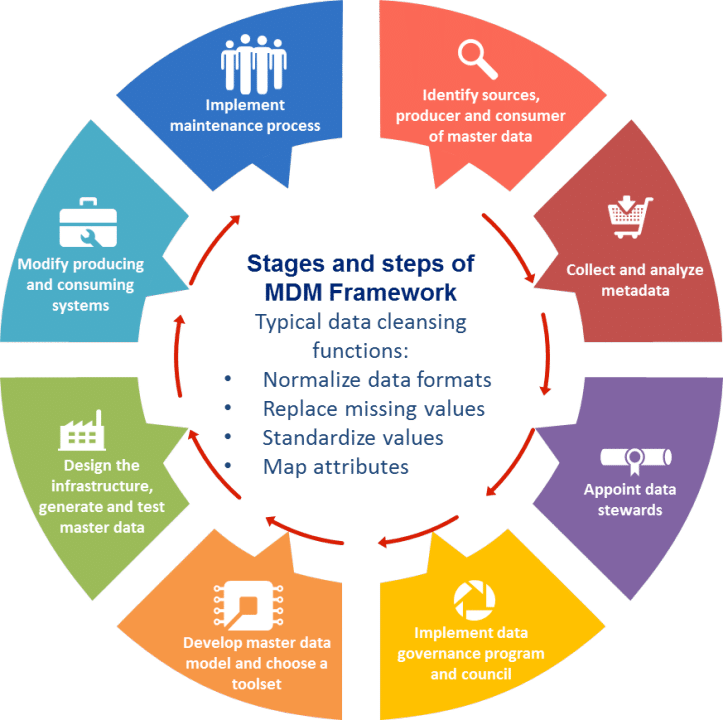
- Data Fragmentation: Data is often soiled across various systems like CRM, ERP, and e-commerce platforms. Integrating these systems can be difficult, especially when dealing with legacy systems.
- Data Quality: Maintaining clean and accurate data can be challenging in fast-moving e-commerce environments where new products, customers, and transactions are constantly being added.
- Scalability: As the e-commerce business grows, the volume of product, customer, and transaction data can explode. Managing this vast amount of data while keeping it accurate and accessible requires robust MDM infrastructure.
- Real-Time Synchronization: In e-commerce, real-time data is crucial, especially for inventory management and customer experience. Ensuring that MDM systems are synchronized with other systems (e.g., stock levels, pricing) in real-time can be a complex task.
- Complex Data Relationships:E-commerce businesses often have complex relationships between products, categories, promotions, and customers. Managing these relationships efficiently requires advanced MDM techniques and tools.
MDM Strategies for E-commerce
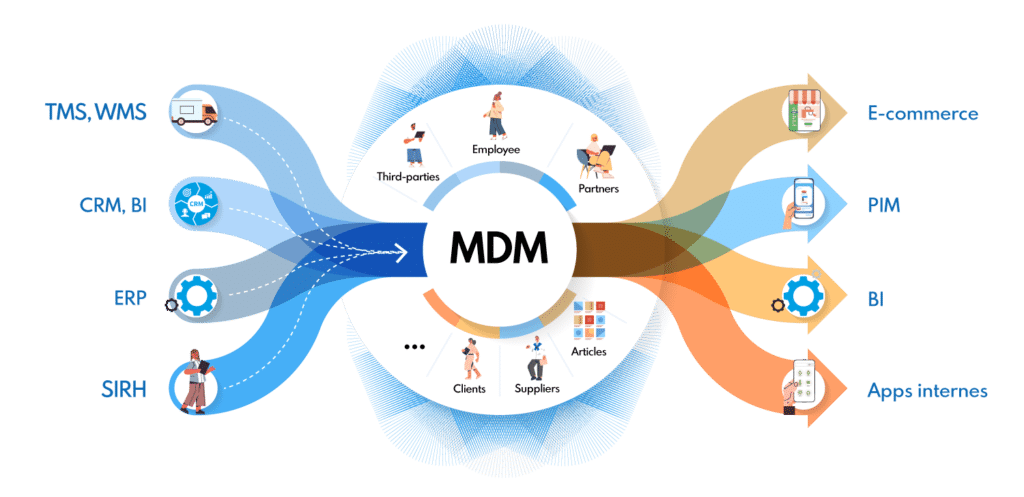
- Centralized Product Information Management (PIM): A PIM system is often used in conjunction with MDM to manage product data across all sales channels. It allows for the centralization of product attributes and ensures consistency across digital and physical touch points.
- Customer Data Integration (CDI): Integrating data from various sources (e.g., CRM, website, mobile app) and centralizing it in a customer data platform (CDP) is essential for a 360-degree view of each customer, enabling more effective segmentation, marketing, and service.
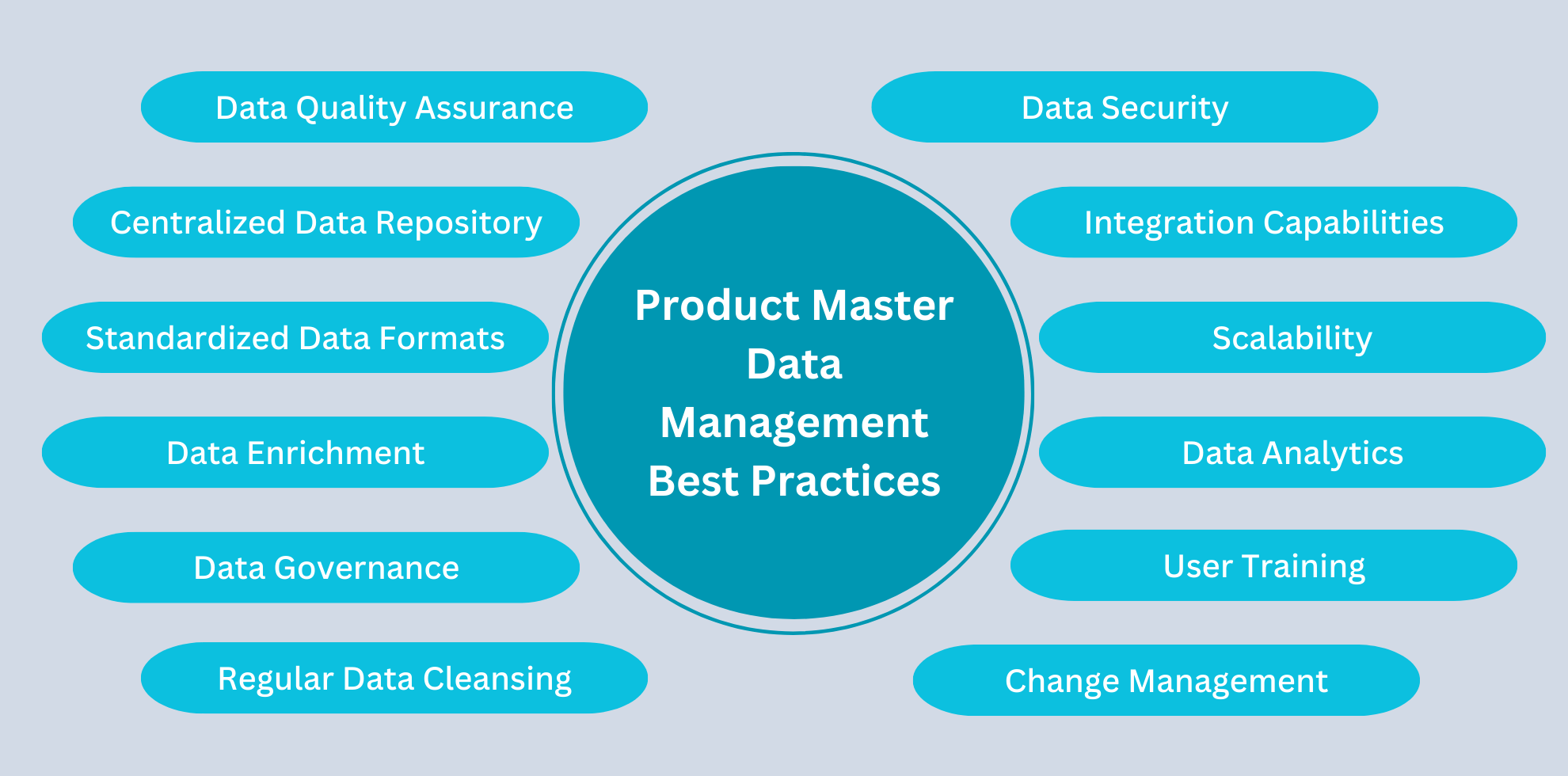
- Data Governance: Establishing strong data governance policies ensures that data is accurate, up-to-date, and consistently formatted. This includes defining roles and responsibilities for data quality, implementing validation rules, and using data stewards to manage data.
- Automation: Using automation tools to update and cleanse data in real time can help maintain the quality and accuracy of data across systems without manual intervention.
- Master Data Hubs: Centralizing master data in a single hub allows e-commerce businesses to manage all critical data from one location, improving data accessibility and reducing the risk of data inconsistency.
Qdata Software Solutions offer a extensive services in mastering the Data for e-Commerce and Inventory Management with our centralized team of experts to the end customer requirements and satisfaction. We work closely with our customers to gather day to day requirements and to meet the clients quality requirements and turnaround time. Our evolution over the years made us one of the touch competitors in the industry and one of the best leading service provider in our region in this industry.
Our Services
De-duplication
Product De-Duplication refers to the process of identifying and removing duplicate product entries within a product database or catalog. Duplicates can occur for various reasons, such as errors during data entry, multiple product listings for the same item, or inconsistencies in product descriptions, SKUs, or variations. The goal of de-duplication is to ensure that each product is represented only once in the database, thereby improving data quality, accuracy, and efficiency in inventory and sales management.
Taxonomy Creation
Taxonomy Creation in the context of e-commerce or data management refers to the process of organizing and categorizing products or information in a hierarchical structure. This structure helps in classifying data in a way that is meaningful, accessible, and easy to navigate for both internal teams (such as product managers or marketers) and end-users (such as customers browsing a website). A well-designed taxonomy makes it easier for users to find the products or information they're looking for and helps search engines index the data more effectively, improving SEO. It also ensures consistency in product descriptions, better inventory management, and a more intuitive customer experience.
Template Creation
Product Template Creation refers to the design and development of standardized structures used to input, manage, and display product data across different systems (such as e-commerce platforms, Product Information Management (PIM) systems, and marketing tools). These templates ensure consistency and accuracy in product listings, enhancing both internal operations (inventory management, categorization) and customer-facing information (product descriptions, specifications, and images). Creating a product template is particularly important for e-commerce businesses to ensure that all product information is organized, easy to update, and presented uniformly across various sales channels. This is typically a process of creating organized Product Specifications/Attributes for each Taxonomy created.
Product Classification
Product Classification refers to the process of organizing and categorizing products into distinct groups or classes based on their shared characteristics, attributes, or uses. This is a crucial task in various business operations, particularly in e-commerce, inventory management, product information management (PIM) systems, and supply chain management. The purpose of product classification is to make it easier for businesses to manage their inventory, streamline the sales process, improve customer experience, and ensure that products are easily discoverable both by customers and internal systems.
Data Enhancement/Enrichment
Data Enrichment is the process of enhancing or supplementing existing data by adding relevant, valuable, and additional information from external or internal sources. In the context of e-commerce, data enrichment can enhance product data, customer information, and other relevant business datasets to improve decision-making, customer engagement, and business performance. For example, product data enrichment involves adding detailed information about products that might not be in the original dataset, such as additional product attributes, customer reviews, related products, or product images. Customer data enrichment might include adding information like social media profiles, purchasing behavior, or demographics, which can lead to more personalized marketing efforts. In short, data enrichment ensures that the data you have is more complete, accurate, and actionable, providing a better foundation for business insights, customer engagement, and operational processes.
Normalisation & Standardization
Both standardization and normalization play crucial roles in preparing product data for analysis, improving the consistency of the data, and ensuring that different features (attributes) of products can be compared on the same scale. Standardization ensures that product attributes like price, weight, dimensions, ratings, or any other continuous variables are scaled in a way that makes them comparable and suitable for analysis. Normalization is useful in e-commerce product data when you need to ensure consistency across products and categories.
UNSPSC Classification
The UNSPSC (United Nations Standard Products and Services Code) classification system is a global classification framework used to categorize products and services in a hierarchical structure. It was developed to help businesses, governments, and organizations categorize products and services uniformly for procurement, data analysis, and reporting purposes. The UNSPSC system is widely used across many industries, including government procurement, e-commerce, logistics, and supply chain management.
Standards and Approvals
In the context of e-commerce, products often need to meet specific standards and approvals before they can be marketed and sold to consumers. These standards and approvals ensure product safety, quality, compliance with legal regulations, and alignment with industry-specific guidelines. The process of acquiring these standards and approvals depends on the type of product, the target market, and the relevant regulatory bodies.
Digital Asset Management
Digital Asset Management (DAM) refers to the systematic approach to organizing, storing, and sharing digital content such as images, videos, audio files, documents, and other digital media. In e-commerce, DAM is essential for managing the vast array of media assets that support product listings, marketing, branding, and customer engagement. In an e-commerce environment, product imagery, videos, descriptions, and other digital assets play a crucial role in influencing purchasing decisions and ensuring a smooth user experience. Effective DAM ensures that these digital assets are easily accessible, appropriately tagged, and up to date, contributing to brand consistency and efficiency in operations. These digital assets include all the medias such as image, videos, technical specification data sheet, brochures, catalogs, safety data sheets, instruction manuals, installation manuals and content used to showcase products, provide product information, and support the purchasing process in online stores.
Image Management
Effective image management ensures that product images are high-quality, accessible, optimized for performance, and consistently aligned with the brand’s guidelines. Given that product images are one of the most crucial aspects of online shopping, image management is vital to driving sales, enhancing user experience, and maintaining a strong digital presence. High-quality, professional images should be taken for all products. For products sourced from vendors or manufacturers, ensure that images provided meet quality standards, or request updates as necessary. Storing all product images in a centralized Digital Asset Management (DAM) system allows for easier organization and access. This system can categorize images based on product types, categories, seasonal collections, or any other tagging structure. Image editing is an essential part of e-commerce product management that ensures product images are optimized for display on your website, mobile apps, and other digital platforms. Well-edited images can significantly improve user experience, drive higher conversion rates, and enhance your brand’s professional image. In e-commerce, the goal of image editing is not just to improve aesthetics, but also to meet specific technical and marketing needs while maintaining consistency across all product visuals.
Cross Competitor Analysis
Cross Competitor Analysis is a strategic process that involves comparing and evaluating your business’s performance, products, and strategies against your competitors in the same market or industry. In the context of e-commerce, this analysis provides insights into how competitors are positioning themselves in terms of pricing, product offerings, customer experience, marketing strategies, and other key performance indicators (KPIs). The goal of cross-competitor analysis is to identify strengths, weaknesses, opportunities, and threats in your competitive landscape, ultimately allowing you to refine your own strategy to stay ahead in the market.